hat geschrieben:
The gravitational field of a massless point particle is first calculated using the linearized field equations. The result is identical with the exact solution, obtained from the Schwarzschild metric by means of a singular Lorentz transformation. The gravitational field of the particle is nonvanishing only on a plane containing the particle and orthogonal to the direction of motion. On this plane the Riemann tensor has a δ-like singularity and is exactly of Petrov type N.

hat geschrieben:
@all Vieleicht hilft die Antwort weiter:
"OK, having devoted my lunch hour to this (the sacrifices I make for Physics!) I have an answer for you. I'm not sure this is the best possible answer, so if anyone can improve on it please jump in. Firstly you're absolutely correct to say that the density of your object increases as it Lorentz contracts. This isn't an illusion: the RHIC observes this every day. Note how the illustrations on the RHIC page I've linked to show the colliding nuclei flattened into disks. However the contracted object can't form a black hole because this violates one of the principles of relativity i.e. the presence or otherwise of the black hole could be used to tell who was moving and who was standing still. So what's going on? The paradox arises from your assumption that it's the mass/density of the object that determines whether it will be a black hole or not, because this isn't true, or rather it's only true in special cases. The Einstein equation that gives us the curvature, and therefore whether a black hole will form, is: Gαβ=8πTαβ. Gαβ is the Einstein tensor that describes the curvature, while Tαβ is the stress-energy tensor. So it's not the mass/density of the object that determines the curvature, it's the stress-energy tensor. There's a shortcut here, because the stress-energy tensor is an invarient i.e. it is the same in all co-ordinate systems. That means the stress-energy tensor we observe is the same as the stress-energy tensor observed in the rest frame of your test object. So if the test object doesn't form a black hole in it's rest frame it will not form a black hole in any other co-ordinate system, even the one you describe in which the object is moving at almost the speed of light. However it's at this point that I run out of steam a bit, which is why I think there's scope for this answer to be improved. It would be nice to give an intuitive feel for what the stress-energy tensor is, and why it doesn't change when we see the object moving at almost the speed of light. We normally write the stress-energy tensor as a 4 x 4 matrix, and with a few approximations about your test object the tensor only has one non-zero value, T00, which is indeed the density. If we write the stress-energy tensor in our frame, where the object is moving, our value for T00 will increase as the density increases, and if nothing else changed this would eventually form a black hole. However in our frame the other entries in the matrix are no longer zero. The changes in the other entries balance out the change in the density, so when we plug our stress-energy tensor into the Einstein equation we get the same curvature as in the test object's rest frame. No black hole!"
Vollkommen korrekt.

hat geschrieben:
@mojorisin Danke Dir, bestätigt auch meine Aussage hier und den anderen Text, den von Dir müsste man dann wohl aber auch mal in Ruhe übersetzten. Passt aber, klärt es weiter.
Vielleicht hätte er sich den Text übersetzen lassen sollen bevor er davon ausgeht dass das seine Aussagen:
hat geschrieben:
Würde nun die relativistische Masse selber Gravitation erzeugen, müsste Alice nur schnell genug am Stern vorbeifliegen, damit dann die Gravitation für sie in ihrem Ruhesystem so groß wird, dass der Planet in den Stern stürzt.
und
hat geschrieben:
Die ART beschreibt die Raumzeit und alle Energie mit einer Matrix, man nennt das in der Physik Tensor und ein ganz wichtiger ist der Energie-Impuls-Tensor (EIT). Der berechnet nun die Raumkrümmung und die ist äquivalent zur Gravitation. Im EIT gibt es eine Komponente in der man die Energie einträgt, auch die kinetische Energie kommt da rein. Da freut sich das Herz, würde doch bedeuten, kinetische Energie krümmt doch die Raumzeit und somit relativistische Masse erzeugt Gravitation. Das ist aber ein klarer Widerspruch zum RP. Geht also nicht. Und nun? Gute Frage, ist ein echt mieser Widerspruch, und zeigt, geht nicht, relativistische Masse kann keine Gravitation erzeugen.
und
hat geschrieben:
Betrachtet man nun ein Elektron, und bewegt sich diesem gegenüber immer schneller, oder dieses bewegt sich einem gegenüber immer schneller, würde seine kinetische Energie irgendwann so groß, dass es einen Ereignishorizont bilden müsste, wenn es Gravitation erzeugt. Das wirkt schon doch wo etwas seltsam.
und und und bestätigt (: Entweder
fließt kinetische Energie ein, oder
nicht (: 7 Jahre und 100e von Beiträge hat er so einen Schmarrn verzapft, und jetzt erzählt er uns dass in Morrisons Zitat der selbe Schmarrn stünde obwohl das genau das Gegenteil davon ist (: Schon blöd wenn man weder englisch noch rechnen kann (: Und jetzt versucht er so zu tun als ob er derjenige wäre der da:
Nocheinpoet, erkennend dass er auf verlorenem Posten steht, hat geschrieben:
Wenn man danach geht, wäre die Gravitation dann relativ. Das wäre ein Argument, für die Existenz von relativer Gravitation. Aber da es hier im Thread zurzeit eben anders läuft, kommt man zu solchen Dingen ja nur schwer.
drauf gekommen wäre, und er müsse es jetzt jenen denen er es nicht geglaubt hat als sie es ihm erklärt haben erzählen (: Jetzt müsste er halt nur noch wissen
wie man die Fallbeschleunigung ausrechnet, dann könnte er sich leichter zwischen rot und grün entscheiden, bzw. lernen die beiden Farben überhaupt erst einmal voneinander zu unterscheiden (:

,


 Anmelden
 Registrieren
 FAQ
 Suche




 ,

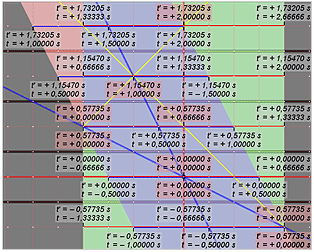
 Wirklich toll, zumindest für alle die schon immer gerne Augenkrebs kriegen wollten (:
 ,




 ,